 homepage | the beginning of


Welcome to the fascinating world of network sockets and port numbers! 🌐✨
When devices exchange data over a network, an IP address only gets you to the right destination building.
To step into the exact office room, you need a socket!
A socket address uniquely identifies every single network connection by binding three vital components: the transport protocol (like TCP or UDP), the IP address, and the specific port number for both the client and server.
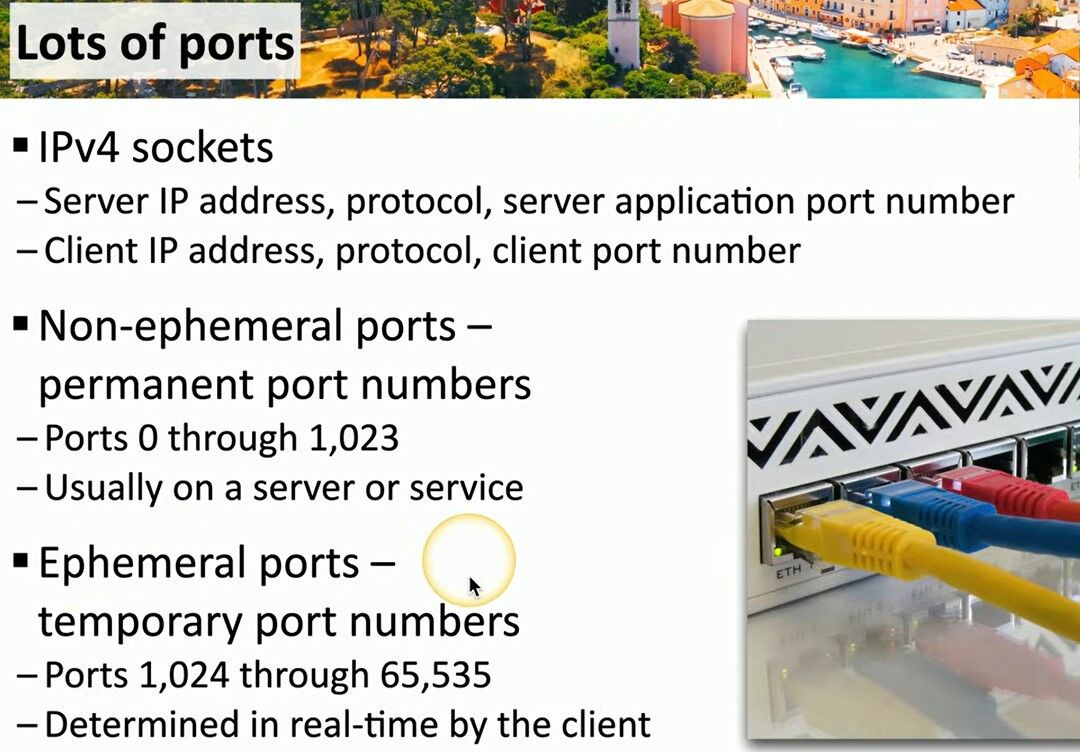
In computer networking, port numbers are divided into two primary types:
🔌 Non-ephemeral Ports (0 to 1,023): These are permanent, well-known port numbers reserved for standard services running on servers—such as web traffic (HTTP on 80, HTTPS on 443) or secure remote access (SSH on 22).
⚡ Ephemeral Ports (1,024 to 65,535): These are temporary port numbers dynamically assigned in real-time by client devices for short-lived outbound sessions. As soon as the communication closes, the port is freed up for future tasks!
Mastering how IPv4 sockets manage incoming and outgoing traffic is an essential foundational skill for cybersecurity analysts, network engineers, and system admins.
Looking for more technical deep dives, networking guides, and hands-on IT insights? Head over to my personal blog at matteocasiraghi.it ! 🚀
#ComputerNetworking #NetworkSecurity #ITInfrastructure
 the beginning of matching tips
Leave a comment