 homepage | the beginning of

Understanding the Dynamic Host Configuration Protocol (DHCP)
DHCP operates using a client-server model.
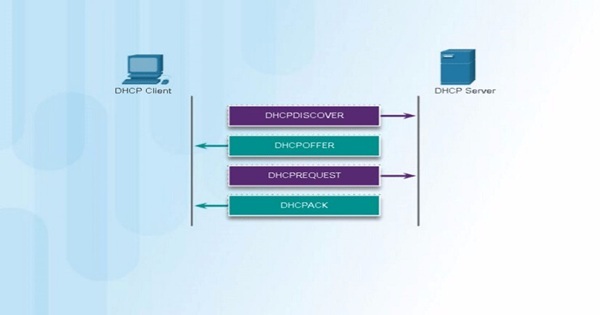
When a DHCP-enabled client boots up or connects to a network, it broadcasts a DHCP Discover message (UDP port 67).
A DHCP server on the network listens for these requests and responds with a DHCP Offer message, proposing an IP address and other configuration options.
The client then sends a DHCP Request message to accept the offer, and the server acknowledges with a DHCP Acknowledgment (DHCPACK) message, completing the lease assignment.
Dynamic and Pooled Allocation:
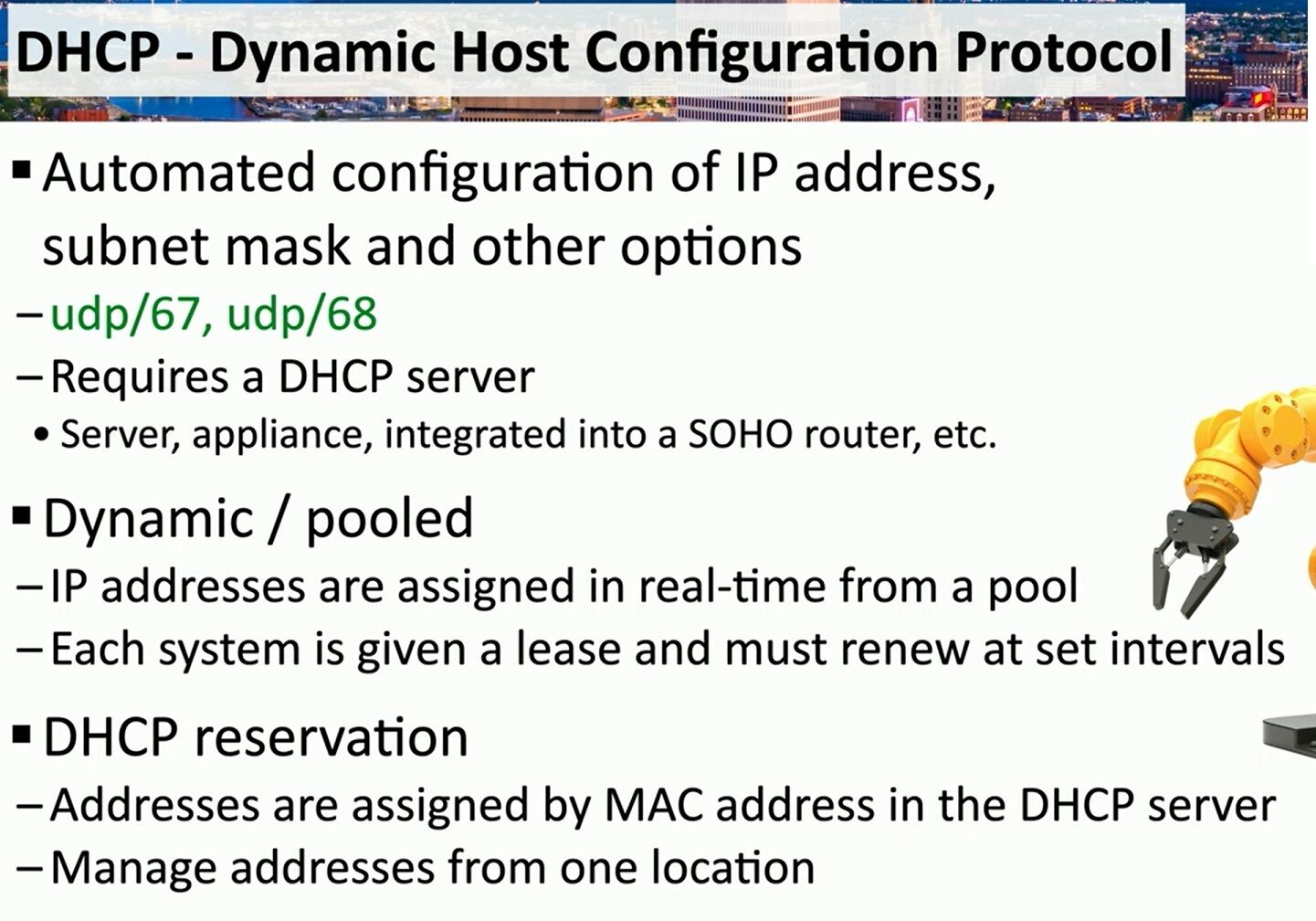
DHCP employs a dynamic allocation mechanism, where IP addresses are assigned in real-time from a defined pool of available addresses.
Each assigned IP address is leased to the client for a specific duration.
Clients are responsible for renewing their lease with the DHCP server at set intervals to maintain their network configuration. This dynamic approach ensures efficient utilization of IP address space.
DHCP Reservation:
For specific devices that require a consistent IP address, DHCP servers often support reservations.
This feature allows administrators to associate a particular IP address with the Media Access Control (MAC) address of a client device.
When a client with a reserved MAC address requests an IP address, the DHCP server will consistently assign the pre-configured address. This provides the benefits of dynamic allocation while ensuring specific devices retain the same IP address.
Benefits of DHCP:
- Simplified Network Administration: Automates IP address assignment, reducing manual configuration.
- Reduced IP Address Conflicts: Prevents multiple devices from using the same IP address.
- Efficient IP Address Management: Dynamically allocates and reclaims IP addresses.
- Centralized Configuration: Allows network parameters to be managed from a single DHCP server.
#DHCP #NetworkProtocol #IPAddressing
For more technical insights and tips, visit my website: https://matteocasiraghimc.wordpress.com/
 the beginning of matching tips
Leave a comment