 homepage | the beginning of


In the rapidly evolving landscape of Information Technology, the 802.11ac standard—commonly known as Wi-Fi 5—marked a pivotal shift in wireless networking. Approved in early 2014, it was designed specifically to overcome the limitations of its predecessor, 802.11n, by focusing on the 5 GHz band.
This transition allowed for a less crowded spectrum and significantly wider channel bandwidth, reaching up to 160 MHz.
By implementing Increased Channel Bonding and denser signaling modulation (256-QAM), Wi-Fi 5 delivered a substantial leap in data transfer speeds, making it possible to reach theoretical throughputs of nearly 7 Gbps.
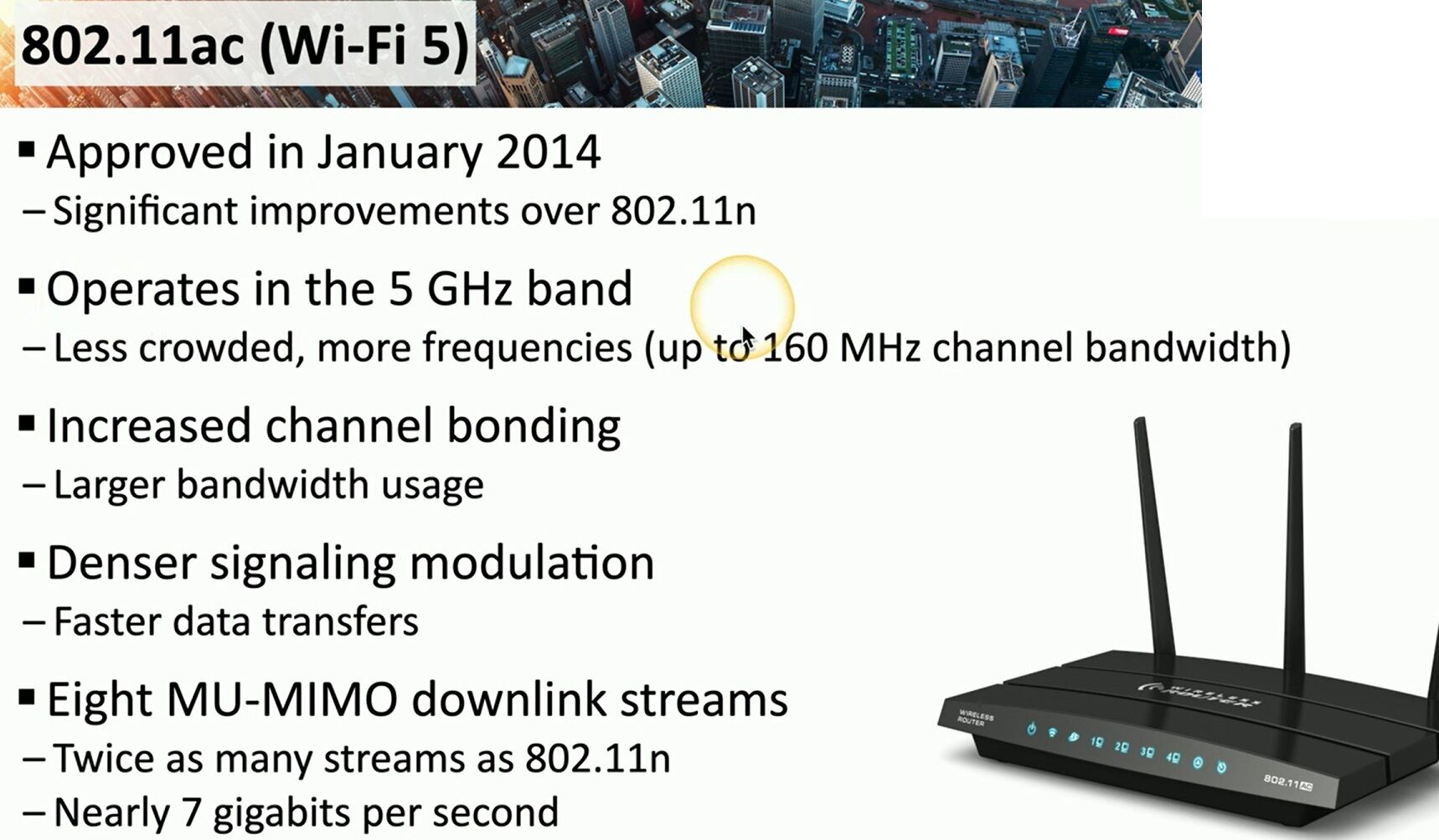
One of the most transformative features shown in the image is MU-MIMO (Multi-User, Multiple-Input, Multiple-Output) for downlink streams.
Supporting up to eight streams, it allows a single access point to communicate with multiple devices simultaneously rather than sequentially. For IT professionals and businesses, this meant a dramatic reduction in latency and improved overall network efficiency in high-density environments.
Understanding these fundamentals is essential for any robust network infrastructure strategy.
#WiFi5 #Networking #InformationTechnology
Visit my website for more insights:
matteocasiraghi.it
 the beginning of matching tips
Leave a comment