 homepage | the beginning of


When we think about printing, our minds often jump to inkjet or laser printers.
However, there’s a fascinating category of printers that operates on a completely different principle, often leveraging a key component highlighted in this image: the heating element.
The image points to a silver component within a printer, identifying it as the heating element responsible for “creating the information on this page.” This immediately tells us we’re likely looking at a thermal printer. Unlike inkjet printers that spray liquid ink or laser printers that use toner and static electricity, thermal printers utilize heat to produce an image.
The most common type of thermal printer is a direct thermal printer.
These printers use specially treated thermal paper that changes color when exposed to heat. The heating element in the printer, often in the form of a thermal print head, selectively heats areas of this paper as it passes, blackening them to form text, barcodes, or images.
A crucial characteristic mentioned in the image is “Full-length heating element” and “No moving print head.”
This is a defining feature of many direct thermal printers, especially those designed for labels or receipts.
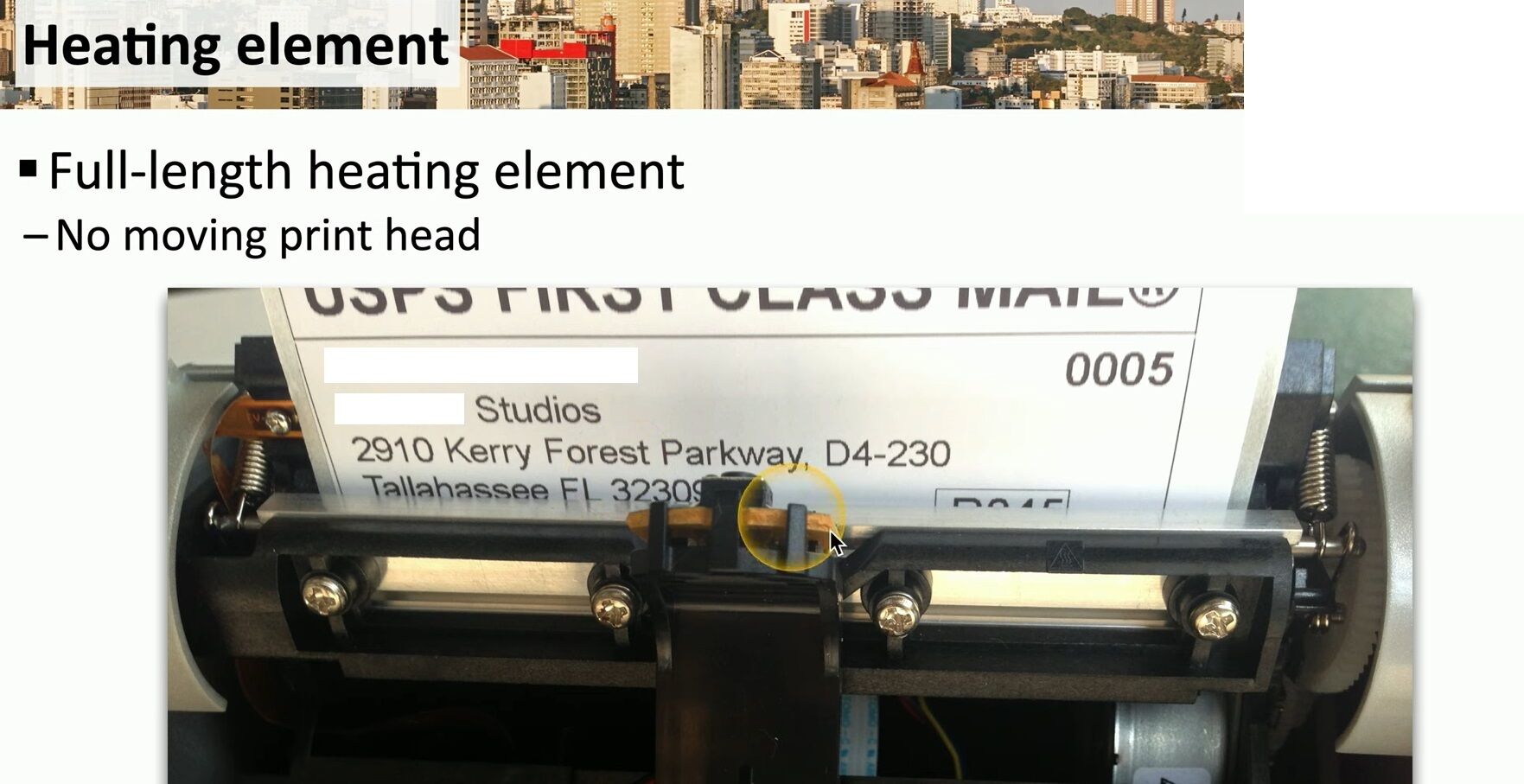
Instead of a print head that moves back and forth across the page (like in an inkjet), the heating element spans the entire width of the print area.
This allows for very fast and efficient printing, as the entire line of print can be “burned” onto the paper simultaneously.
The example in the image, showing a mailing label, is a perfect use case for a direct thermal printer. They are widely used for:
- Receipts: Think of the receipts you get from gas stations or retail stores.
- Shipping Labels: Like the one shown, providing quick, durable, and scannable information.
- Barcode Labels: Essential for inventory management and logistics.
- Tickets: Event tickets, boarding passes, etc.
The advantages of direct thermal printing include simplicity (fewer moving parts mean less maintenance), quiet operation, and no need for ink or toner cartridges, reducing running costs. The main drawback is that the prints can fade over time, especially if exposed to heat, sunlight, or certain chemicals.
Understanding the role of the heating element in these printers demystifies how a significant portion of our everyday printed materials come to life, silently and efficiently, without a drop of ink.
#ThermalPrinting #PrinterTechnology #DirectThermal
Discover more tech insights on my website: https://matteocasiraghimc.wordpress.com
 the beginning of matching tips
Leave a comment