 homepage | the beginning of


Check your *Task Manager*
In the world of IT troubleshooting, **rebooting** is often the first and simplest solution to many technical issues. Why is this so effective?
It’s because many of the problems we encounter with software and hardware can be traced back to small, temporary bugs or memory leaks that accumulate over time. When we **turn the system off and on again**, we’re essentially giving the computer a chance to reset these processes and start fresh.
For example, if there’s a **bug in your router software**, a quick reboot will often clear up the issue. This is because routers can experience memory issues, overloading with data or running into glitches that cause slowdowns or connectivity problems. A restart gives the router the ability to clear out the faulty processes and restore optimal function.
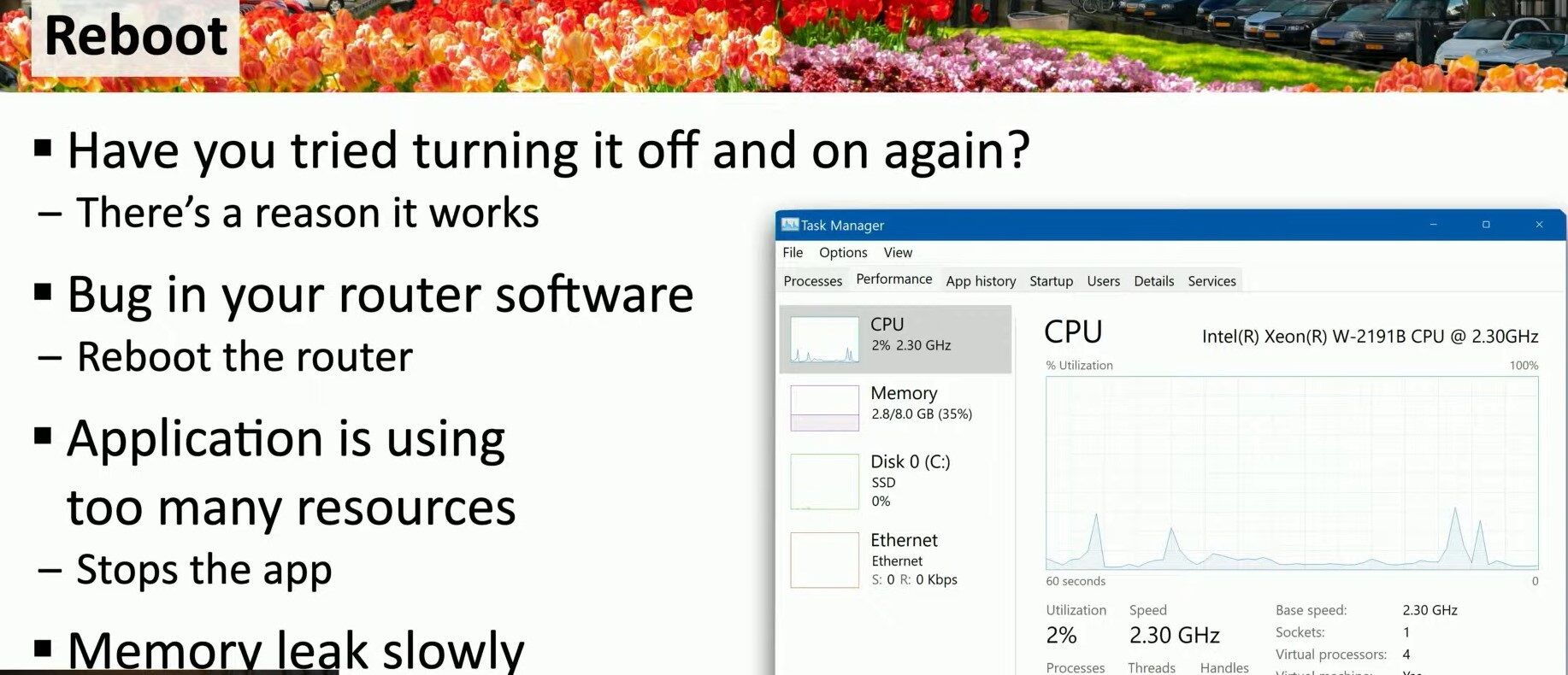
Additionally, if an **application is using too many resources**, stopping or restarting the app is crucial. Apps that consume excessive CPU or memory can dramatically slow down your system or even cause crashes. This is often visible in the **Task Manager** (as shown in the image) under the performance tab, where you can see real-time CPU and memory usage. When the system becomes overloaded, finding and halting the offending app can free up valuable resources.
**Pro Tip 1:** Restarting isn’t just for PCs. Your smartphone, router, and even your smart TV can benefit from an occasional reboot to refresh performance.
**Pro Tip 2:** Regularly check your **Task Manager** to monitor system resources. Identifying which applications consume the most memory or CPU can help prevent future issues by managing those processes more effectively.
#TechTips #Troubleshooting #PCPerformance
 the beginning of matching tips
Leave a comment